

Beyond Profit The Role of Ethics, Faith, and Stakeholders in Modern Business
Beyond Profit In today’s fast-moving world, businesses are everywhere. From the coffee we drink in the morning to the phone we use all day, companies shape our daily lives. But one important question still creates debate: What is the real purpose of a business? Is it only to make profit, or does it have a greater responsibility toward people and the world?
This question takes us back to the ideas of economist Milton Friedman, who strongly believed that the only responsibility of a business is to increase its profits. According to him, businesses exist for shareholders, and as long as they follow the law, they do not need to worry about social or environmental issues (Friedman, 1970). At first, this idea may sound practical. After all, businesses need money to survive. But when we look closely at today’s world, this perspective feels incomplete.
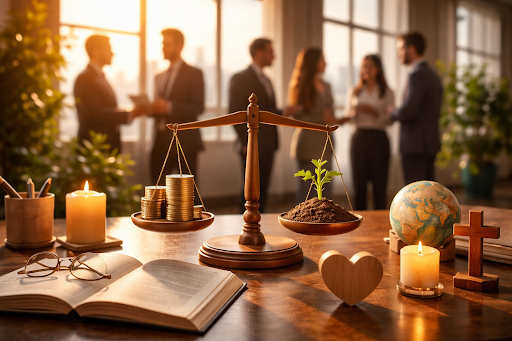
I personally find it difficult to fully agree with Friedman. We live in a time where competition is intense, and many businesses focus so much on profit that they forget their deeper purpose. This is where ethics and faith can play an important role. Faith reminds us that we are not true owners of what we have; we are caretakers. Whether it is money, resources, or power, we are responsible for how we use them. This belief changes how we see business. It shifts the focus from “How much can I earn?” to “How can I create value for others while earning?”
Good leadership is not only about maximizing profit. It is about caring for people. Faith teaches us to be givers, not just takers. When leaders understand this, they begin to make decisions that are not only profitable but also meaningful. And honestly, in the long run, those decisions often benefit the business too.
The Rise of Stakeholders
In modern business, the idea of stakeholders has become very important. Stakeholders include everyone connected to a business: employees, customers, suppliers, investors, and even the community. Unlike Friedman’s shareholder-focused view, the stakeholder approach suggests that businesses should consider the needs of all these groups when making decisions (Freeman, 1984).
This approach makes sense in today’s world. Businesses that care about their employees create better work environments. Employees feel valued, and this increases productivity and loyalty. Similarly, when companies listen to their customers, they build trust. And trust, once earned, becomes one of the strongest assets a business can have.
We can see this in real-life examples. Many companies today focus on customer well-being by offering healthier options, safer products, and more transparency. For instance, the rise of gluten-free and organic products shows how businesses respond to changing consumer needs. People are becoming more health-conscious, and businesses are adapting. This is not just about profit, it is about understanding people.
In some cultures, there is a saying: “The customer is God.” While this may sound strong, it reflects the importance of respecting customers. But even here, balance is necessary. Businesses should not only prioritize customers but also ensure fairness to employees, suppliers, and the environment.
This is where ethics becomes essential. In our studies, we learned three simple questions that can guide ethical decision-making:
- Is this action legal?
- Is it fair and balanced?
- How would I feel if I were affected by this decision?
These questions may sound simple, but they are powerful. They remind us that every decision has consequences. When businesses act ethically, they build long-term relationships instead of short-term gains.
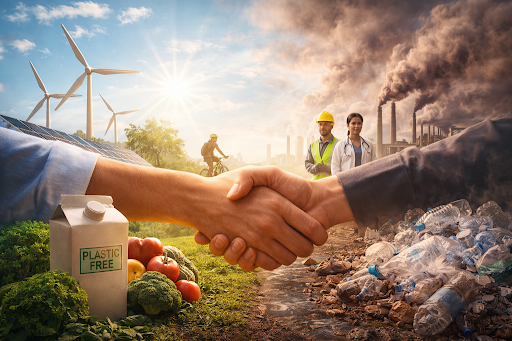
If we look at the current state of the world, it is clear that businesses have played a role in both progress and damage. On one hand, they have created jobs, innovation, and convenience. On the other hand, they have contributed to environmental problems and health issues.
For example, industries that produce unhealthy food have impacted public health. Similarly, pollution from factories, excessive waste, and overuse of natural resources have harmed the environment. Oceans filled with plastic, polluted air, and climate change are not just random problems, they are connected to business activities.
Because of this, businesses today have a responsibility to help fix these issues. Two areas are especially important: environmental sustainability and human health.
Sustainability means using resources in a way that does not harm future generations. Businesses can adopt eco-friendly practices such as reducing waste, using renewable energy, and avoiding harmful materials. Even small steps, like plastic-free packaging, can make a difference.
At the same time, businesses must prioritize human health. This includes offering safe products, promoting healthy lifestyles, and ensuring safe working conditions. When companies take these responsibilities seriously, they not only help society but also build a positive brand image.
Interestingly, many businesses are already moving in this direction. They are realizing that consumers care about more than just price. People want to support companies that align with their values. So, doing good is not only ethical, it is also smart business.
The Role of Certification and Accountability
As businesses try to become more responsible, there is also a need for accountability. How can we know if a company is truly ethical or just pretending?
This is where organizations like B Lab come in. Founded in 2006, B Lab provides certification to companies that meet high standards of social and environmental performance (B Lab, 2023). These companies are known as Certified B Corporations.
The certification process is not easy. It evaluates how a company treats its employees, its impact on the environment, its relationship with customers, and its level of transparency. Only businesses that meet strict criteria receive the certification.
Before learning about this, I honestly had no idea such certifications existed. But now that I know, it changes how I see businesses. As a consumer, I feel more confident choosing companies that are certified because it shows they are committed to doing good.
However, awareness is still limited. Many people do not know about these certifications. This means there is a need for more education and promotion so that consumers can make informed choices.
Ethics, Faith, and the Future of Business
At the end of the day, business is not just about numbers. It is about people, relationships, and impact. Ethics plays a central role in shaping this impact. Without ethics, businesses may achieve short-term success, but they risk losing trust and credibility.
Faith adds another layer to this understanding. It reminds us that our actions have meaning beyond profit. It encourages us to act with honesty, kindness, and responsibility. When business leaders combine ethical principles with faith-based values, they create organizations that truly make a difference.
As someone who hopes to become a leader in the future, this idea is very important to me. I want to create an environment where people feel safe, respected, and valued, not just physically, but also emotionally and morally. I want to build something where trust is strong, and people feel proud to be part of it.
This may sound idealistic, but I believe it is possible. Many businesses are already moving in this direction. The shift from profit-only thinking to purpose-driven business is happening slowly, but it is happening.

Conclusion
The debate about the purpose of business is not new, but it is more relevant than ever. While profit is necessary, it should not be the only goal. Businesses have a responsibility to consider their impact on stakeholders, the environment, and society as a whole.
By embracing ethics, listening to stakeholders, and being guided by values such as faith and responsibility, businesses can create a better future. They can move beyond profit and become forces for good.
And maybe that is the real success, not just earning more, but making a meaningful difference in the world.
References
B Lab. (2023). About B Lab. https://www.bcorporation.net
Freeman, R. E. (1984). Strategic management: A stakeholder approach. Pitman.
Friedman, M. (1970). The social responsibility of business is to increase its profits. The New York Times Magazine.


Comment (1)
The Design of Work: Finding Purpose Beyond the Paycheck
says April 01, 2026 at 1:17 pm[…] When you look at work this way, it becomes more than a transaction. It becomes a space where growth happens. […]